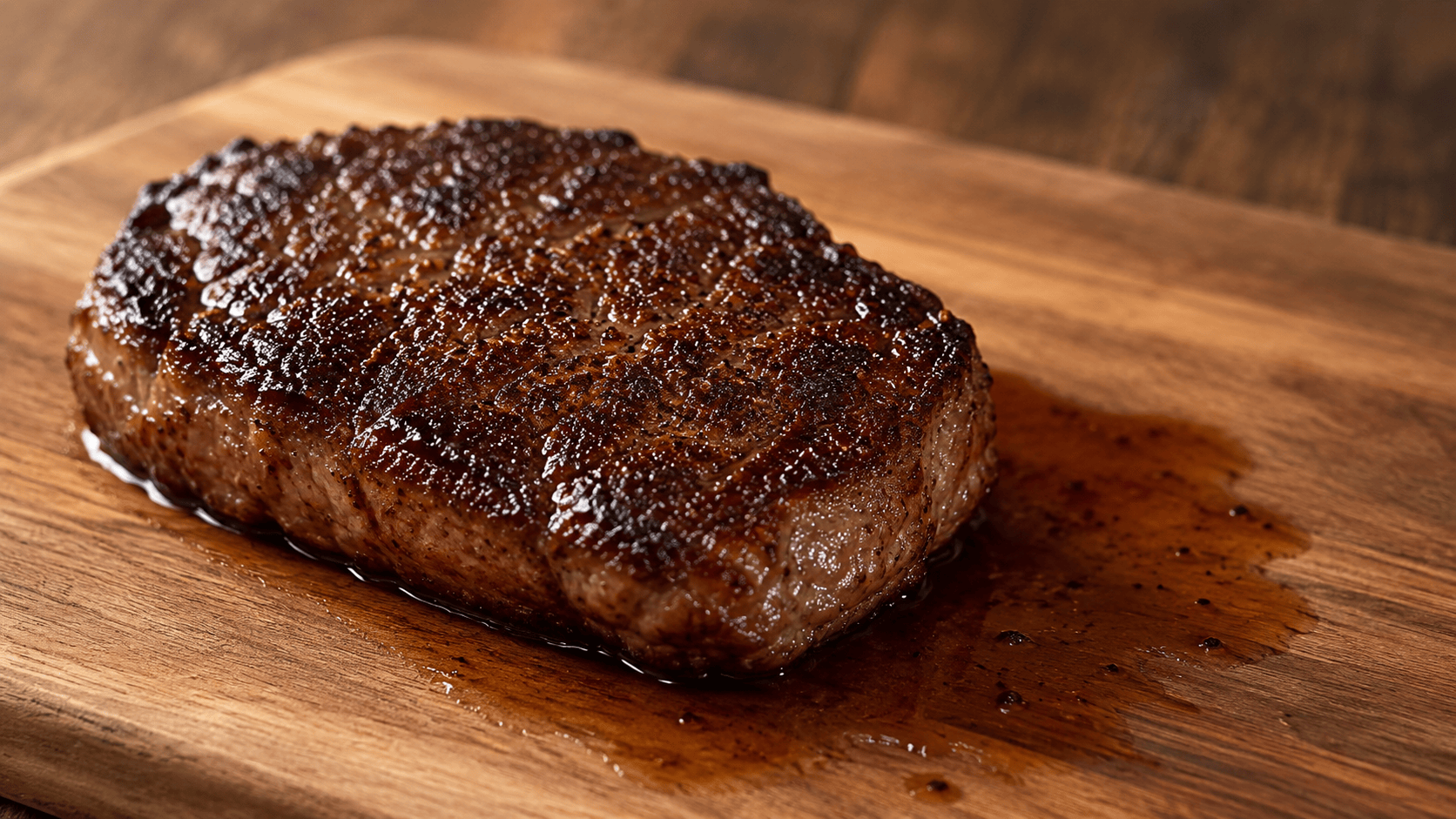
You’ve heard it forever. Every cooking show. Every cookbook. Every well-meaning relative standing over the grill.
“Sear it first. Locks in the juices.”
You seared your steak perfectly. Dark brown crust. Smelled incredible. Then you sliced it open and a puddle spread across the cutting board.
That’s not failure. That’s physics. The idea that searing seals in moisture is wrong, and it has been wrong since 1847.
Where the Myth Comes From
In 1847, a German chemist named Justus von Liebig had an idea. He proposed that applying high heat to meat’s surface would fuse it into a watertight barrier, trapping all the juice inside. It was a reasonable guess for the time. Nobody had tested it.
French chefs took the idea and ran with it. Auguste Escoffier, the godfather of modern French cooking, wrote it into his cookbooks. A century later, Julia Child repeated it on television. By then, “sear to seal” was cooking scripture.
But Liebig was wrong. And nobody bothered to check for over a century.
What’s Actually Happening
Meat is bundles of protein fibers. When those fibers hit heat, they contract. Hard. Picture squeezing a wet rope from all sides. The water inside gets pushed toward the center of the meat.
If you cut into the meat immediately, that pressurized water has nowhere to go but out. It floods the cutting board. The steak didn’t lose more juice because you seared it or didn’t sear it. It lost juice because you cut into it before the fibers relaxed.
Searing creates flavor through the Maillard reaction: amino acids and natural sugars reacting at high heat to form hundreds of new compounds. That deep brown crust tastes nutty, savory, complex. It’s the best part of the steak.
But it has nothing to do with trapping moisture. Nothing at all.
The Evidence
In 2013, J. Kenji Lopez-Alt at Serious Eats decided to settle this once and for all. He weighed identical steaks. Seared some first, then roasted. Roasted others, then seared. Some only roasted. Some only seared.
Every steak lost roughly the same amount of moisture. The order didn’t matter. The sear didn’t matter. The loss was nearly identical across every method.
Meat loses juice because heat squeezes protein fibers. The sear is for flavor, not moisture. Period.
How to Sear Properly
You still want that crust. You just need to understand what you’re actually doing.
1. Pat the steak bone-dry. Paper towels. Right before it hits the pan. Surface moisture is the enemy of browning. It boils at 212°F. Maillard needs roughly 280°F. Every drop of water must boil away before browning starts.
2. Hot pan, thin oil. Cast iron or carbon steel. Preheat dry. Add oil once the pan is hot. Wait for the shimmer: the oil surface ripples like heat waves over asphalt. That’s your green light.
3. Meat down. Don’t touch it. Let it sit for 2-3 minutes. Constant flipping interrupts surface contact. The crust needs sustained heat. Flip once.
4. Sear the edges. Tongs. Hold the steak upright on its fat cap and edges. 30-60 seconds per side.
5. Let it rest. This is where moisture actually gets managed. A 5-10 minute rest lets the protein fibers relax and reabsorb liquid. The temperature drops a few degrees and the water redistributes through the meat.
The Real Rule
Sear for flavor. Rest for juiciness. Never confuse the two.
You can have a perfectly seared, overcooked, dry steak. Or a poorly seared, perfect medium-rare, juicy one. The goal is both: great crust plus the right internal temperature. One gives you taste. The other gives you tenderness. They’re separate jobs.
Your Steak Searing Checklist
- ☐ Pat steak bone-dry with paper towels, right before the pan
- ☐ Heavy pan, preheated dry, oil added after the pan is hot
- ☐ Wait for the oil shimmer. Never the smoke.
- ☐ Meat down. Don’t touch for 2-3 minutes per side.
- ☐ Flip once. Sear edges with tongs.
- ☐ Rest 5-10 minutes on a warm plate, tented loosely with foil
Save this. Send it to someone who still sears to “seal.”
Cook the Principle
Put this into practice.
40-Minute Salted Steak — 50 min · Beginner Pan-Seared Chicken Breast — 25 min · Beginner