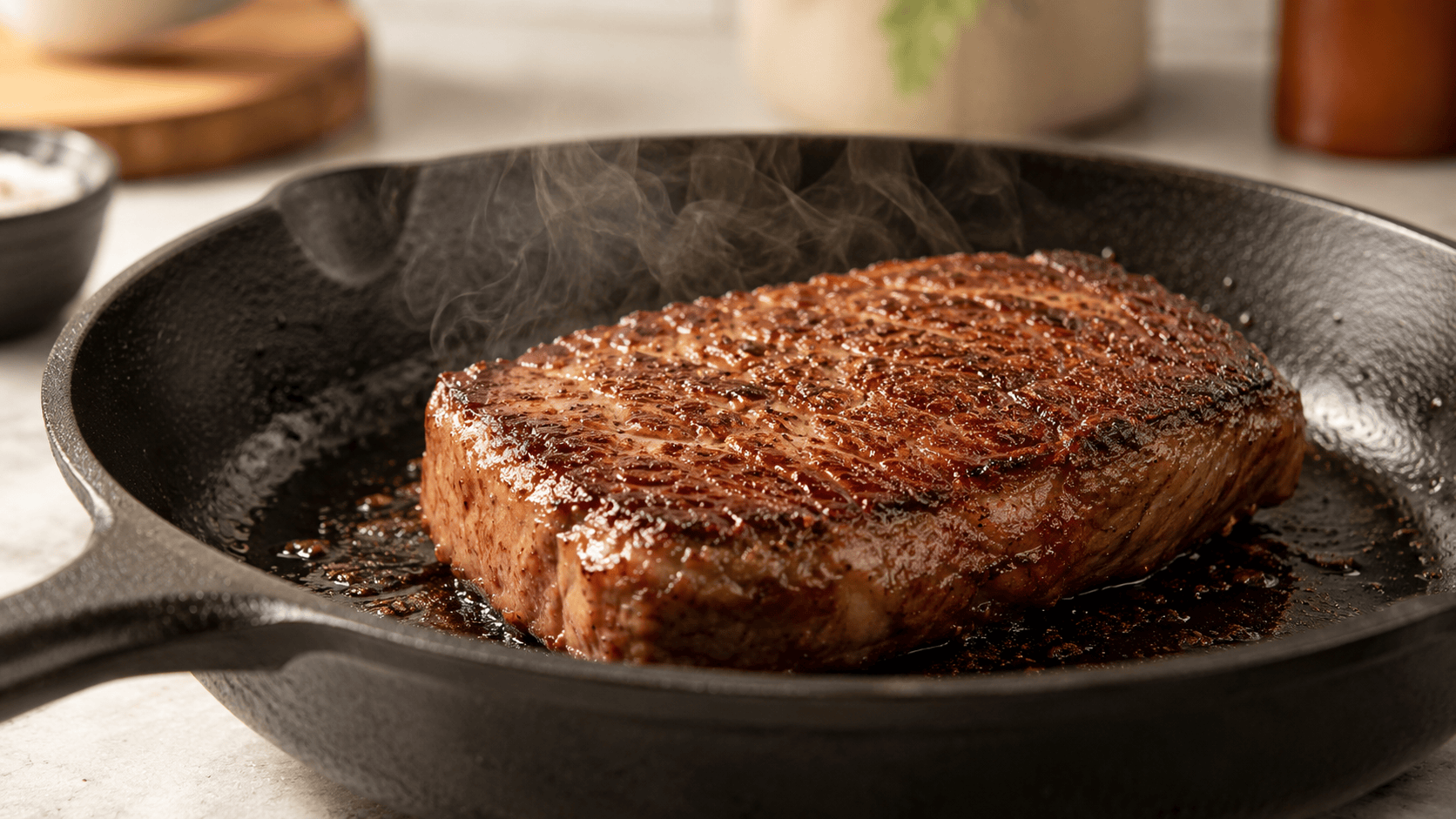
You wanted a steakhouse crust: deep brown, nutty, savory. The kind of crust that makes you stop and stare for a second before cutting in.
Instead you got gray.
You’re standing over the pan wondering what went wrong. The heat was high. The pan was hot. You did everything the recipe said. And still, no crust.
It’s probably not your pan. It’s probably not your heat. It’s one thing you skipped.
What’s Actually Happening
The Maillard Reaction, Simply
Browning isn’t just color. It’s flavor.
When a steak’s surface hits roughly 280°F, something called the Maillard reaction kicks in. Proteins and natural sugars in the meat rearrange into hundreds of new compounds: the nutty, savory, “steakhouse” taste you can’t get any other way.
No Maillard = no crust. It’s that simple.
Why Water Is the Enemy
Here’s the catch: water boils at 212°F. Maillard needs about 280°F.
If there’s any moisture on your steak’s surface, even a thin film you can barely see, the surface can’t get hotter than 212°F until every drop of water has boiled away. You’re standing there waiting for a crust to form, and your steak is busy boiling itself.
That steam you see in the pan? That’s the moisture barrier. As long as it’s there, you’re steaming, not searing.
The Fix: 5 Steps to a Proper Crust
1. Pat Your Steak Bone-Dry
Paper towels. Right before the pan. Even if you salted it an hour ago. Salt draws moisture to the surface while it rests. That thin film of liquid is why you’re steaming instead of searing.
15 seconds of patting. That’s the step.
2. Use Your Heaviest Pan
Cast iron. Carbon steel. Thick stainless. When a cold steak hits a thin pan, the pan temperature plummets and never recovers. A heavy pan stores more heat energy. It stays hot enough for Maillard.
Preheat the pan dry. Add high smoke-point oil (avocado, canola, grapeseed). Then the steak.
3. Wait for the Shimmer
The oil should shimmer, barely smoking. No shimmer? Not hot enough for Maillard. Billowing smoke? You’re burning the oil before the steak even touches the pan.
Shimmer. That’s your green light.
⚠️ Turn on your vent fan and open a window. Searing creates smoke.
4. One Steak at a Time
Crowding the pan drops the temperature and creates a steam bath from multiple wet surfaces. If you’re cooking for a crowd, do it in batches. Hold finished steaks in a warm oven (200°F) on a wire rack.
5. Don’t Touch It for 3–4 Minutes Per Side
Constant flipping interrupts the sustained surface contact needed for browning. Let the crust form. Flip once. The second side gets the same treatment.
(There’s a “frequent flip” method that also works, flipping every 30 seconds. But pick one and commit. Don’t do something in between.)
One Myth Worth Busting
“Searing locks in the juices.”
This is the most persistent myth in home cooking and it’s completely wrong. Searing does not seal anything. It creates flavor through the Maillard reaction. Juiciness comes from not overcooking the interior.
You can have a perfectly seared, overcooked, dry steak. Or a poorly seared, perfectly medium-rare, juicy one. The goal is both: great crust plus correct internal temperature.
Your Steak Crust Checklist
- ☐ Pat steak bone-dry with paper towels, right before the pan
- ☐ Heavy pan, preheated dry, then oil added
- ☐ Wait for the oil shimmer
- ☐ One steak at a time, don’t crowd the pan
- ☐ Don’t touch for 3–4 minutes per side
Save this. Use it the next time you’re searing.
The short version: Drying your steak matters more than how hot your pan is. Wet meat steams. Dry meat sears.
Cook the Principle
Put this into practice.
40-Minute Salted Steak — 50 min · Beginner Pan-Seared Chicken Breast — 25 min · Beginner